Restaurant inventory software: every sale deducts stock by recipe.
Ingredients, recipes, goods receipts, counts and waste in one ledger, with the cost and margin of every item ready.
- Recipe-based deduction
- Waste and counts
- Profitability analysis

Which items make you money?
- Recipe costFrom ingredient costs, including waste.
- Low margins in redA price is suggested based on your target margin.
- Every channel deductsPOS, waiter, QR, app and delivery platform sales.
Recipe-based stock in four steps.
- 1Add ingredientsIn bulk, with units and suppliers.
- 2Write recipesIngredients and quantities for each item.
- 3Opening countCount current stock, then continue with goods receipts.
- 4Sales deduct stockCost and margin are ready.
What is restaurant inventory management?
Restaurant inventory management means tracking how ingredients come in, get used and get lost. Kept on paper or in Excel, it always lags behind: sales are deducted by hand at the end of the day, waste goes unrecorded and count differences become a surprise at month end.
Recipe-based stock management moves this to the moment of sale: as soon as an item is sold, its ingredients are deducted according to its recipe. Goods receipts, transfers, counts and waste are kept in the same ledger.
How does recipe-based inventory work?
Every ingredient is a card, every item a recipe.
- Ingredient cardDefined with its unit, category and default supplier.
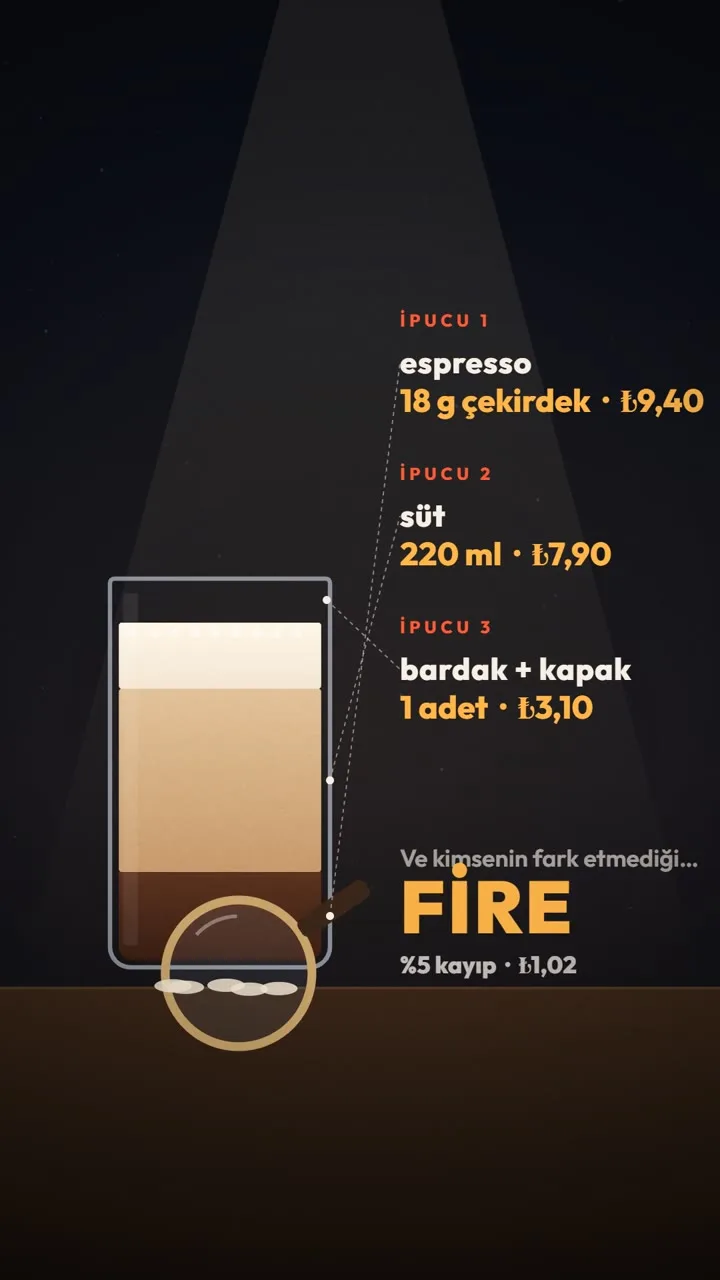
- Item recipeFor example, 18 grams of coffee, 200 ml of milk, a cup and a lid for a latte. The waste rate goes into the recipe too.
- Deducted from every channelPOS, waiter tablet, QR menu, app or delivery platform.
- Cancellations are reversedIngredients from a cancelled order are written back to stock.
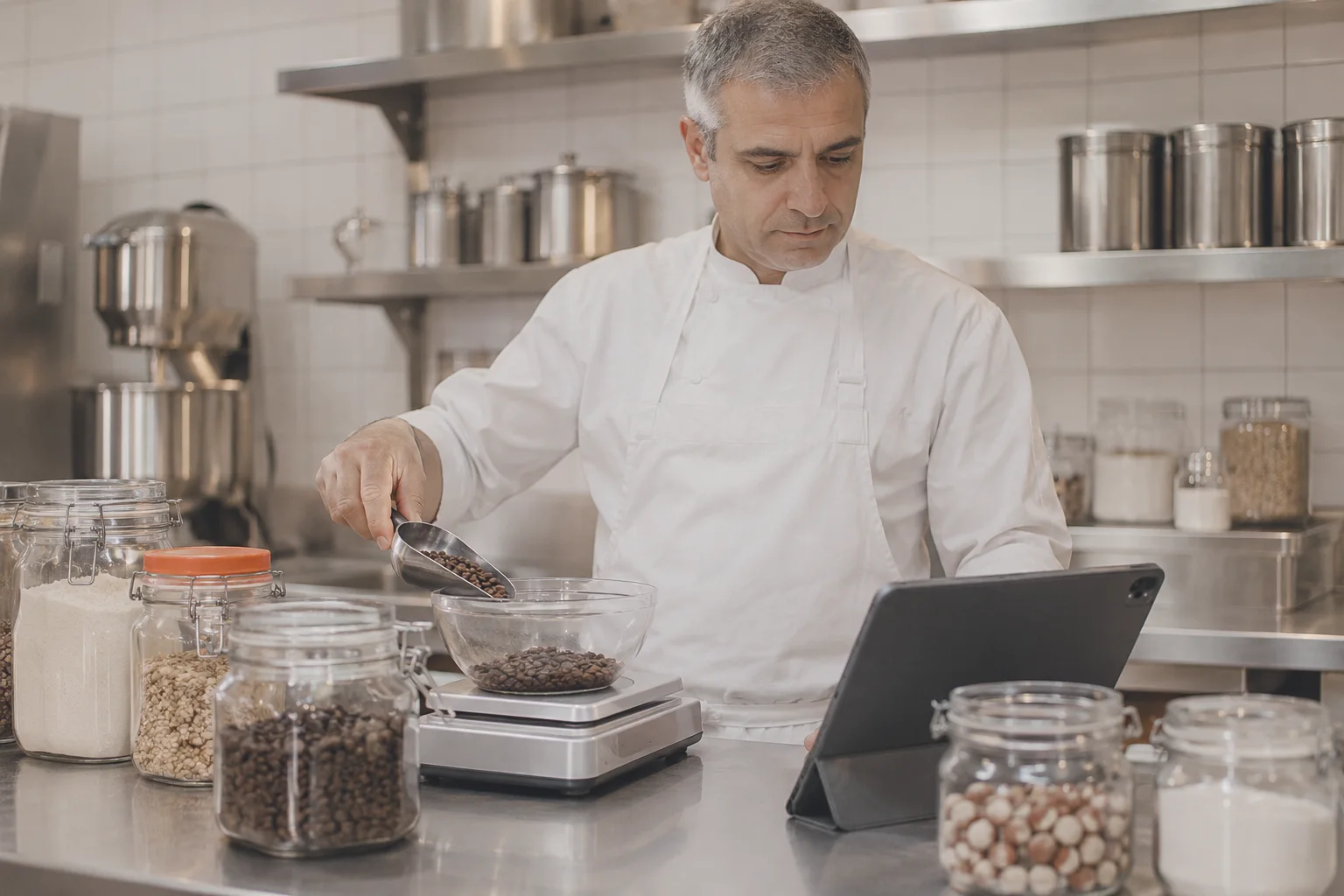
Waste, count differences and losses
Every movement documented
From goods receipts to transfers, from counts to waste; returns to suppliers and returns to the storeroom are separate documents too.
Waste report
Waste is recorded with a reason, so you see what was lost, where and why.
Blind count
The person counting doesn't see the expected quantity; once the difference is approved, an adjustment is posted. Warehouse and vehicle stock: sipnik Field.
Recipe costing and profitability analysis
FIFO costing
Each goods receipt is entered at its unit price; recipe cost is calculated from ingredients, including waste.
Margin and price suggestion
Low-margin items are flagged in red, and a price is suggested based on your target margin.
Purchasing and suppliers.
When stock runs low, a purchase suggestion is prepared.
- Grouped by supplierSince each item has a default supplier, suggestions are grouped accordingly.
- WhatsApp or PDFSend the order to your supplier either way.
- From order to goods receiptConfirmed with supplier, delivery note number and unit price; stock, cost and batch update at once.
- Batches and expiryBatches and expiry dates are tracked automatically.

Paper and Excel, or sipnik inventory?
Last updated: 4 November 2026
| Topic | Paper / Excel | sipnik inventory |
|---|---|---|
| Sales reflected in stock | By hand at day end | At the moment of sale, by recipe |
| Waste | Often not recorded | Documented, in the waste report |
| Counts | With expected quantity visible | Blind count, difference approved |
| Cost | At old purchase price | FIFO, from current purchases |
| Purchasing | By guesswork | Suggestion when stock runs low |
| Margin | Estimated at month end | Item by item, ready |
Questions
How do you manage restaurant inventory?
Define ingredients as cards, write a recipe for each item and do an opening count. From then on, every sale deducts stock by its recipe.
Are sold items deducted from stock automatically?
Yes. When an item with a recipe is sold, its ingredients are deducted; for items without a recipe, you can track stock by unit count if you like.
Are delivery platform orders deducted from stock?
Yes. Items from orders received through connected delivery platforms are also deducted by recipe.
What is a blind count?
It means counting without seeing the expected quantity. Once the difference is approved, an adjustment is posted; the count is never fitted to the expected number.
How does recipe costing work?
The quantity of each ingredient is multiplied by its unit cost, waste is added and everything is summed. Unit cost comes from the purchase price at goods receipt, using FIFO.
Can I see stock for multiple branches in one place?
Yes. Central warehouse, branch storeroom, bar and kitchen are separate locations, and stock value is shown per location.