
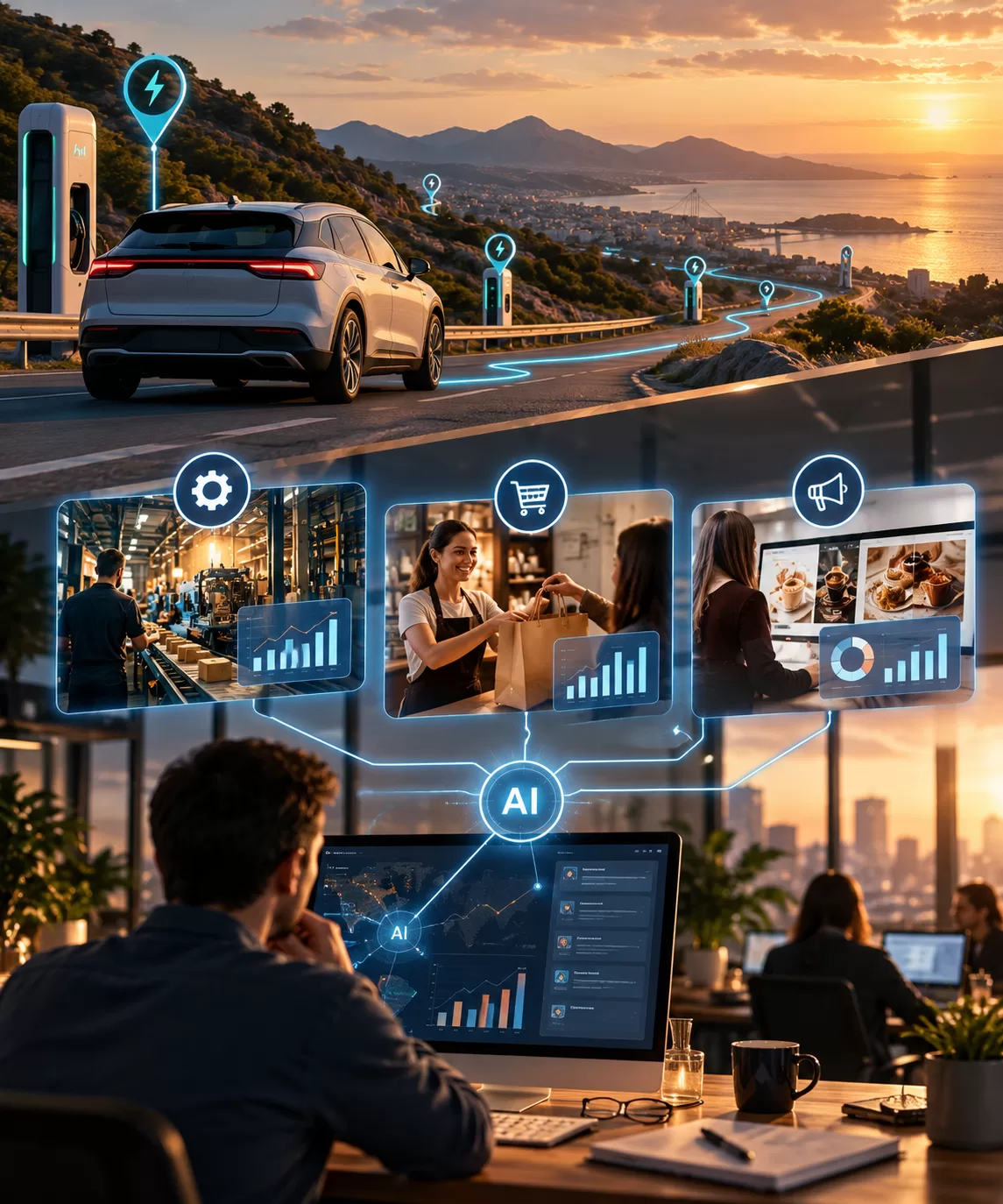
When electric cars began to spread, it wasn’t only engine technology that changed. Our driving habits changed too.
Today, when we plan a trip, we no longer look at distance alone. We weigh battery capacity, charging stations, energy consumption and the route, all together.
We are living through a similar transformation in the age of artificial intelligence.
We now plan the products and systems we build not only around technical capacity, but around hourly usage limits, weekly quotas, processing costs and resource consumption.
As technology changes, so does the way we make decisions.
So, are businesses redesigning their own working models around the realities of this new world?
Are production processes still running on yesterday’s demand forecasts?
Can sales teams keep pace with customers’ changing buying behavior?
Are marketing budgets managed in the light of measurable results and real-time data?
Does a café know at which hours of the day it gets busy, and how busy? Can it measure which product sells best, which customers come back and which campaign actually works?
Because today the point is not simply to produce more, sell more or advertise more.
The point is to use the resources at hand at the right time, in the right place and with the greatest efficiency.
When a business keeps its POS in one system, its orders in another, its customer information in a third and its marketing in yet another, turning all that data into meaningful decisions becomes hard.
Yet when processes are connected, from sales to customer loyalty, from orders to stock tracking, from marketing to reporting, a business does more than run its operations; it also generates the data it needs to manage them better.
This is exactly where systems that help businesses transform the way they work become important.
This is precisely the need that drives us as we build sipnik.
sipnik brings together POS and ordering, customer loyalty, digital wallet and subscription solutions, social media management and smart reporting for cafés, restaurants, patisseries, bakeries and multi-location brands, all in one ecosystem.
And the point is not just to digitize operations. It is to help a business know its customers better, run its campaigns more deliberately and create more value from its data.
Because I believe the successful businesses of the future will not simply be the ones that work harder or use more technology.
The businesses that stand out will be those that understand their data, manage their resources wisely and adapt quickly to changing conditions.
Electric cars taught us to rethink energy and the route. Artificial intelligence is now pushing us to rethink time, capacity and productivity.
So the real question is this:
Are our businesses preparing to use the technologies of the future, or to work in a way that fits the conditions of the future?
To start transforming the way your business works today:
#sipnik #AI #DigitalTransformation #BusinessManagement #Productivity #Entrepreneurship
Skip setting all this up piece by piece.
Wallet, loyalty, subscriptions and order-ahead come ready for your brand.
Sip Your Brand!